Make one phone call before buying anything
Many Learn to Play and beginner programs lend full sets of gear — some cover nearly the entire equipment list. Call the program and ask: "Do you lend beginner gear, and what does my child actually need on day one?"
That call can turn a several-hundred-dollar shopping list into skates and a stick. It is the single highest-value ten minutes in youth hockey.
Know what's in the bag
Thirteen things go in a hockey bag. Here they all are on one player — but you almost never need to buy all thirteen new.
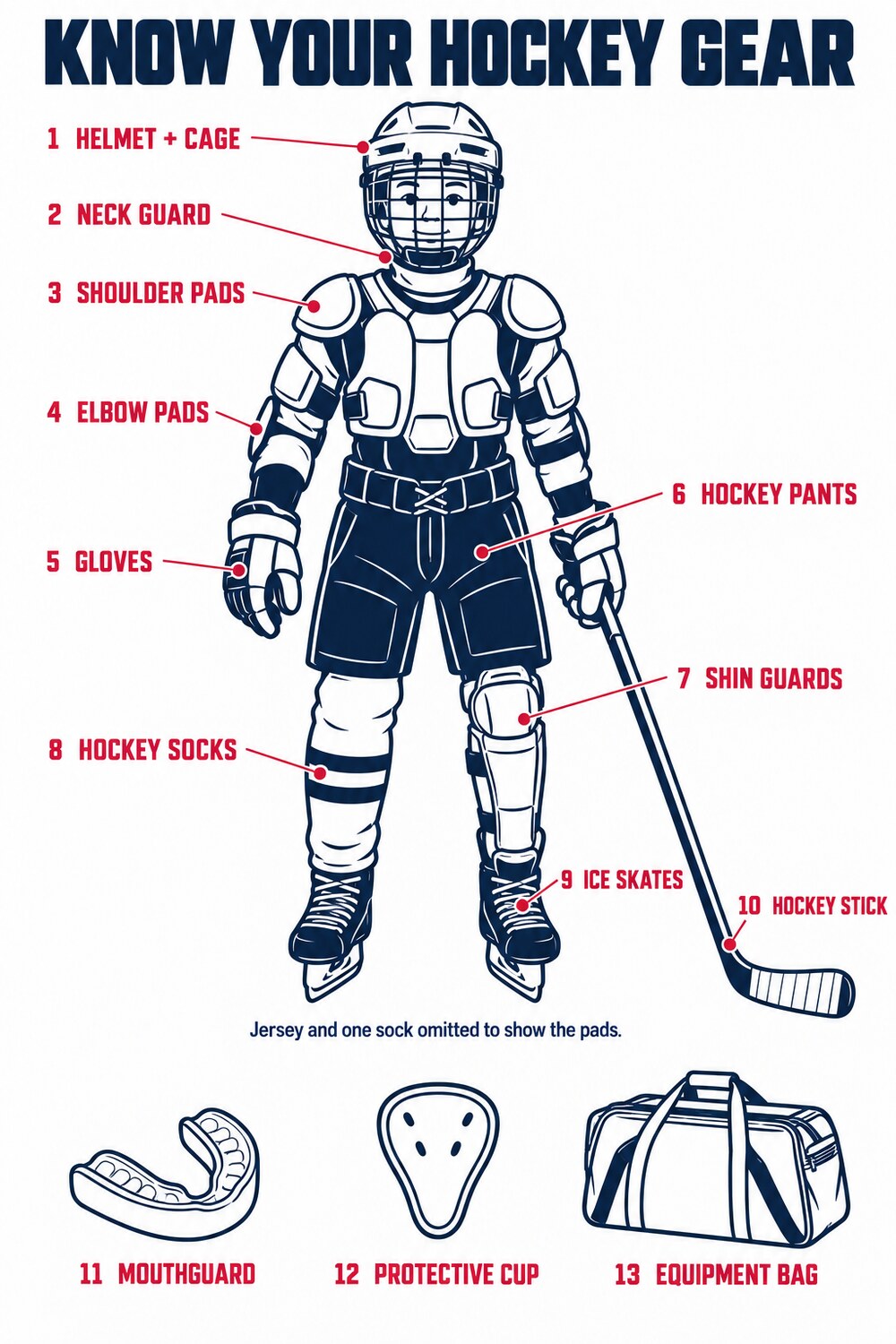
See every piece, with our honest buy/used/skip call on each →
Check what you already have
Hand-me-downs and sibling gear are where hockey families save real money — but the rules are different for every piece. A too-long stick gets cut down for free at any shop. A too-big bag is completely fine. A too-big helmet gets replaced, because protective gear that slides away from what it protects isn't protecting it. Season Plan's app runs this check with you, item by item.
Spend where it matters, save where it doesn't
The two items that deserve the most attention are the helmet (attention to the specific model — not a big budget) and skates (a professional fitting before any purchase). Shin guards, pants, and pads are where the used market saves you the most. What a first season really costs →
Let the site walk the bag with you
Add your player — name, age, experience, skater or goalie — and Season Plan walks all thirteen pieces of the bag with you, one at a time: what to buy new, what's a smart used buy, and how each piece should fit. Mark what you already own and it keeps a running list of what's left. No account, and nothing leaves your own browser.